



29.09.2026
How to Integrate Factory Automation Step by Step
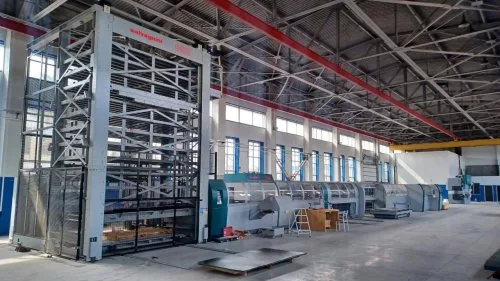
A new laser, press brake, or robotic cell can instantly improve an individual operation. However, if material is still waiting for a forklift, programs are prepared manually, and finished parts pile up between processes — the plant has merely created an "island of automation." Understanding how to integrate manufacturing automation means connecting equipment, material flows, data, and people around a clearly defined production goal.
Concise Course in the Fundamentals of Stamping Theory
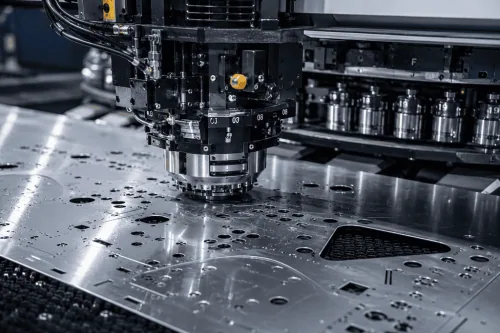
Damage to punches and dies or their premature wear in most cases depends on delayed technical inspection. Periodic checking of all machine parts: punch holders, bed, tool drum, as well as proper cleaning of all components from residues of the processed material, the accumulation of which can lead to breakdowns, will allow avoiding problems and wear of the tool and equipment.
Automated Material Handling Systems That Scale
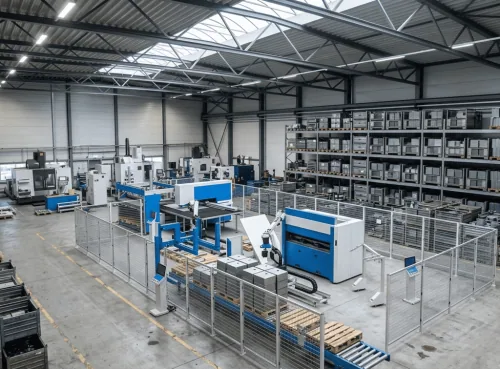
A laser can finish a nest in minutes, yet production still loses hours when sheets wait for a forklift, parts sit unmarked between operations, or a press brake operator searches for the next kit. Automated material handling systems address these losses by controlling how raw material, work-in-process, and finished parts move through the factory. For sheet metal manufacturers, the objective is not automation for its own sake. It is stable flow from storage to cutting, bending, finishing, and dispatch.
Panel Bender vs Press Brake for Modern Production
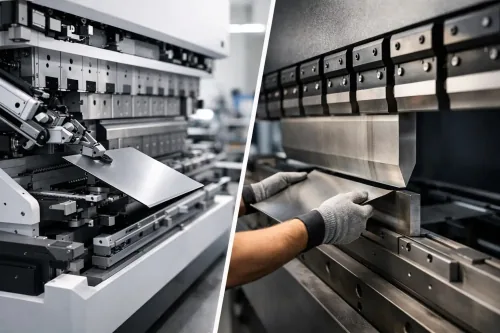
A panel bender vs press brake decision is rarely about which machine is better in absolute terms. It is about which bending method matches the parts, batch sizes, labor model, quality requirements, and future automation plans of a specific factory. A press brake remains the most versatile bending platform in sheet metal. A panel bender can transform productivity where repeatable panel-type components dominate production.
The correct investment should be based on total production economics, not only machine purchase price or maximum tonnage. Setup time, operator dependency, material handling, part flow, floor space, tooling, and downstream assembly all affect the result.
What Is the Sheet Metal Fabrication Process?
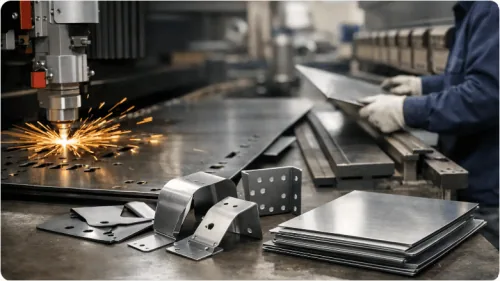
A flat sheet becomes a production-ready enclosure, bracket, panel, cabinet, or structural component only when every operation is planned around the next one. When buyers ask, “what is sheet metal fabrication process,” they are usually asking more than how metal is cut and bent. They need to understand how design, material, machinery, handling, quality control, and finishing work together to deliver a repeatable part at the required cost.
What is a Punch Press Machine and how it works?
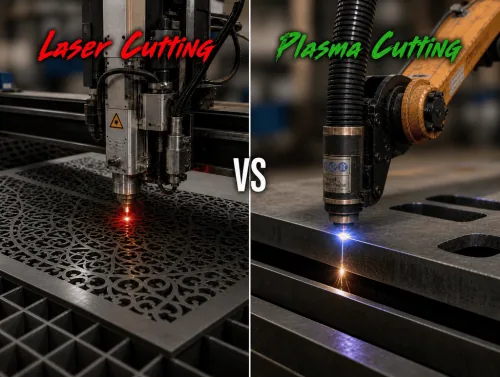
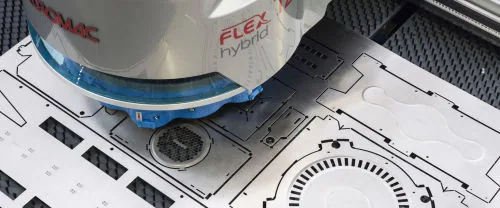
Sheet metal fabricators use a wide variety of tools and machines to form materials into various shapes and sizes. Precise and repeat cutting is best achieved using specialist equipment and can include shearing, guillotining, laser cutting, plasma cutting etc. A punch press machine is another excellent option to help to manage the cutting of metal and we take an in depth look at how it works.

Latest Developments in Sheet Metal Fabrication: 4 Key Trends
The worlds of sheet metal and ductwork fabrication are already experiencing significant disruption due to four groundbreaking innovations.

Industrial dust extraction systems. Benefits for your business.
In many sectors and manufacturing processes, using effective industrial dust extraction equipment is essential to maintaining a safe and healthy work environment. Industrial dust extraction systems are made to efficiently and safely remove airborne suspended particles, helping to raise the standard of the air in workplaces.